
Living in Korea Guide

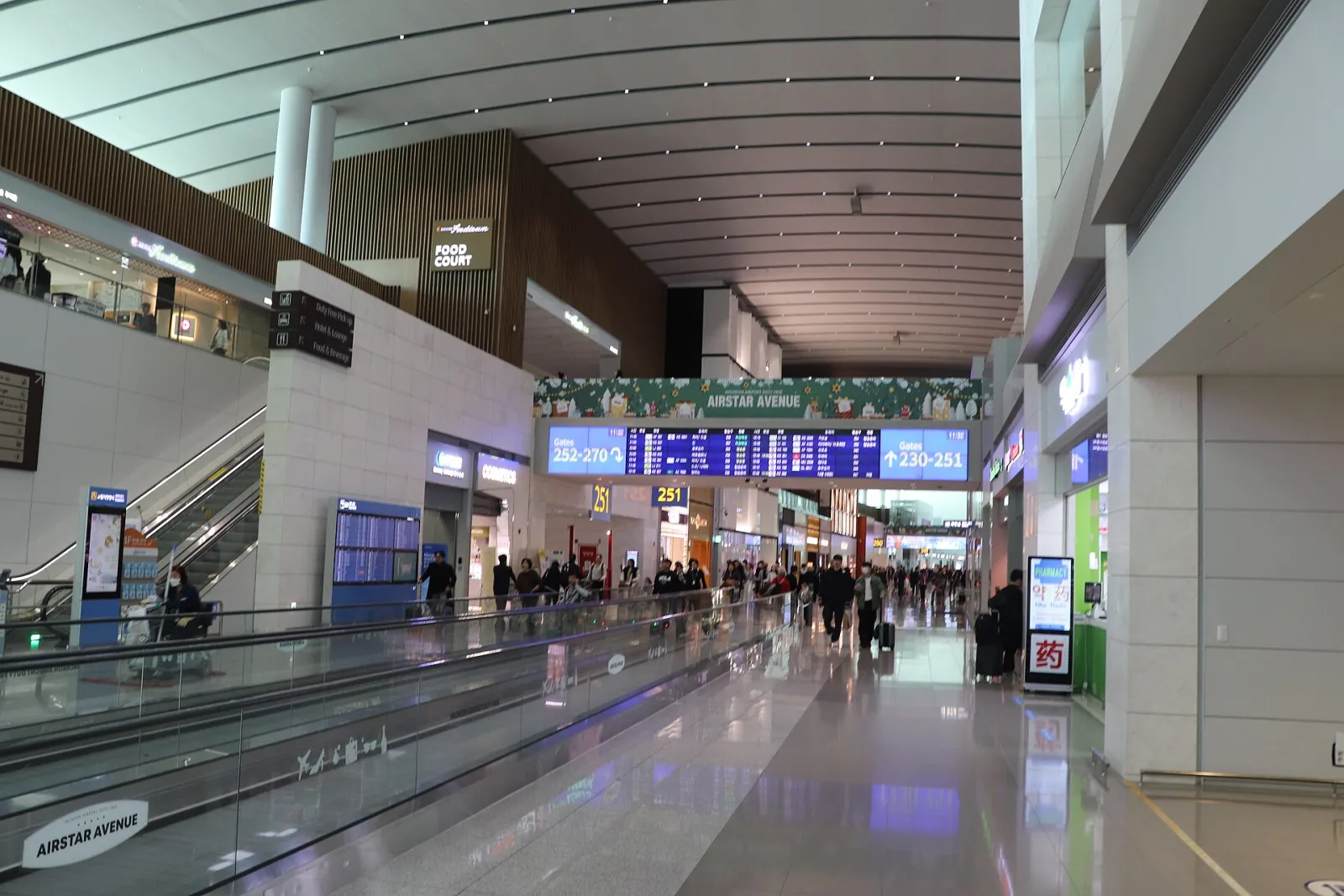
    Inside the Incheon International Airport terminal
    Photo: Andrzej Otrębski · CC BY-SA 4.0 · Wikimedia Commons

    Entering Korea

    Just arrived in Korea for the first time? Here's how to get from the airport to your destination, plus some things that are good to know when you enter the country.

    Procedures After Arriving at the Airport

    1. Immigration: submit your passport and arrival card (filled out on the plane)
    2. Baggage claim: pick up your luggage at the carousel
    3. Customs declaration: declare valuables or cash of 10,000 USD or more
    4. Head to the arrivals floor: choose your transportation (airport railroad, bus, taxi)

    Airport Transportation

    Airport Bus (Limousine)
    • Runs from Incheon International Airport and Gimpo Airport to Seoul and major cities nationwide
    • Operating hours: 4 a.m. to midnight (varies by route)
    • Fare: 10,000 KRW to 18,000 KRW (varies by distance)
    • Convenient when you have a lot of luggage; stops in front of major hotels and terminals
    Airport Railroad (AREX)
    • Incheon International Airport ↔ Seoul Station express: about 43 minutes (9,500 KRW)
    • All-stop train: about 1 hour, with intermediate stops (4,150 KRW)
    • Direct transfer to Seoul Subway Lines 1 and 4
    • Operating hours: 5 a.m. to midnight
    Taxi
    • Regular taxi: metered fare + highway tolls
    • Incheon Airport → downtown Seoul: about 65,000 KRW to 100,000 KRW
    • Deluxe taxi: about 1.5–2 times a regular taxi (English-speaking)
    • International taxi: for foreigners only, can be booked in advance via app

    What to Have Ready on Arrival

    • Cash: at least 20,000–30,000 KRW to buy a transit card (currency exchange counters available)
    • SIM: buy one at a convenience store or carrier booth inside the airport
    • Wi-Fi: the airport's free 'Airport WiFi' is available
    • School contact: save your international office's emergency number in case of trouble

    Types of Housing

    Korea offers many types of housing. Choose one that fits your budget, lifestyle, and Korean language ability.

    TypeDepositMonthly RentFeatures
    DormitoryNone to one semester's worth200,000–500,000 KRWProvided by the university, meal-plan options, priority for international students
    Studio / Officetel5,000,000–20,000,000 KRW350,000–800,000 KRWIndependent space with a private kitchen and bathroom; large deposit required
    Goshiwon / Goshitel100,000–500,000 KRW250,000–500,000 KRWSmall single room, maintenance fees included, quick move-in
    Hasuk (boarding house)None or small400,000–700,000 KRWMeals provided (2–3 a day), experience Korean home life
    Share house500,000–2,000,000 KRW300,000–500,000 KRWShared common areas, great for making international friends

    Sites for Finding Housing

    • Zigbang (zigbang.com): search for studios/officetels
    • Dabang (dabangapp.com): compare a wide range of listings
    • For foreigners: KoreaStay, Borderless House

    Transportation

    Korea's public transportation is famous worldwide for being convenient and affordable. With a single transit card, you can use the subway, buses, and even pay at convenience stores anywhere.

    Public Transit Fares (Seoul, 2025 reference)

    ※ Fares may be adjusted each year.

    TransportationBase FareNotes
    Subway1,400 KRWUp to 10 km, with additional fare beyond that
    Bus (city)1,500 KRWBlue (trunk lines), green (branch lines)
    Bus (village)1,000 KRWGreen minibuses
    Taxi4,800 KRWBase fare (2 km), 20% late-night surcharge
    KTX (high-speed rail)About 50,000 KRW+Seoul↔Busan in about 2 hours 30 minutes

    Essential Transit Apps

    • Kakao Map: directions and real-time bus/subway arrival information
    • Naver Map: detailed walking/public-transit routes
    • Kakao T: hail taxis and check fares in advance

    Health Insurance

    Foreigners staying in Korea for six months or longer are required to enroll in the National Health Insurance. It may seem like a burden at first, but it greatly reduces your medical costs when you get sick or injured.

    Mandatory National Health Insurance Enrollment

    ItemDetails
    Who Must EnrollThose planning to stay 6 months or longer after alien registration (including D-2 and D-4 visas)
    PremiumAbout 70,000 KRW to 140,000 KRW per month (varies by income/residence status)
    BenefitsYou pay only 30–60% of treatment costs; the rest is covered by insurance
    How to ApplyA bill is sent automatically after alien registration, or visit an NHIS branch office

    Coverage Scope

    ✓ Covered

    • Outpatient visits (hospitals, clinics)
    • Inpatient treatment and surgery
    • Prescription medication from pharmacies
    • Health check-ups (partial)

    ✗ Not Covered

    • Non-covered items such as cosmetic and plastic procedures
    • Some dental care (implants, etc.)
    • Medical costs incurred while staying abroad

    Seeing a Doctor

    If it's your first time using a Korean hospital, familiarize yourself with the process in advance. Korea offers high-quality medical care, and thanks to health insurance, the costs are reasonable too.

    General Treatment Process

    1. Register at the hospital after arriving (show your alien registration card or passport)
    2. Wait for your turn in the waiting room
    3. Consultation and tests (if needed)
    4. Payment (pay your share after the insurance is applied)
    5. Pick up your prescription medication at a nearby pharmacy (a prescription is required)

    Understanding the Types of Medical Facilities

    • Clinics/small hospitals: minor symptoms like colds or skin conditions → a nearby neighborhood clinic
    • General hospitals: hospitalization, surgery, specialized care → university hospitals, Samsung/Asan, etc.
    • Emergency room: serious injuries, high fever, difficulty breathing, etc. → call 119 or go directly

    Using a Pharmacy

    Prescription drugs must be bought at a pharmacy. When you submit your prescription, the pharmacist will explain how to take the medication. Over-the-counter drugs like cold medicine and digestive aids can be bought without a prescription at convenience stores or pharmacies.

    Banking

    To live in Korea, you'll need a bank account. You'll use it for paying rent, receiving part-time wages, setting up automatic phone bill payments, and more.

    Documents Needed to Open a Foreigner's Account

    • Passport (original)
    • Alien registration card (issued 90 days after arrival)
    • Student ID or certificate of enrollment
    • Korean phone number (for identity verification)

    Without an alien registration card, opening an account can be difficult. Right after arriving, get by with a prepaid card provided by your university or by exchanging foreign currency, and open a bank account after completing your alien registration.

    Major Banks

    • KB Kookmin Bank (KB): dedicated counters for foreigners, English service
    • Shinhan Bank: English banking available via the SOL app
    • Woori Bank: many branches on campus, dedicated accounts for international students
    • Hana Bank: strong foreign-exchange services, multilingual support

    Mobile Banking

    After opening an account, install each bank's app so you can transfer money, check your balance, and manage your cards from your smartphone. Fintech apps like Toss and KakaoBank (which you can join 6 months after alien registration) are convenient too.

    Getting a Phone Plan

    In Korea, a mobile phone is essential for everyday life. Bank verification, delivery apps, and transit apps all require a Korean number.

    Prepaid SIM Card (recommended right after arrival)
    • Buy one instantly at the airport or a convenience store with just your passport
    • Choose a data-only or a voice+data plan
    • Fee: about 30,000 KRW to 50,000 KRW for one month
    • Brands: EG SIM, Evergreen Mobile, KT Prepaid, etc.

    Right after arriving, we recommend buying a prepaid SIM at the airport and switching to a postpaid plan after completing your alien registration.

    Postpaid Plan (recommended for long-term stays)

    Documents required: alien registration card, Korean bank account, certificate of enrollment

    Major carriers: SKT, KT, LG U+ (stable service, higher fees)

    MVNOs (budget carriers): Hello Mobile, Liiv M, Freet, etc. (lower fees, same network)

    Example Plans (monthly)
    • Unlimited data + calls: about 50,000 KRW to 70,000 KRW (major carriers)
    • 11 GB data + 100 minutes of calls: about 15,000 KRW to 25,000 KRW (MVNO)
    eSIM Option

    If you use an eSIM-compatible device (iPhone XS or later, recent Galaxy models, etc.), you can activate service through an app without a physical SIM. KT, SKT, and others offer eSIM services, and you can even buy one before arriving in Korea.

    Safety Basics

    Korea is generally a very safe country. Still, keep these emergency contacts and basic safety tips in mind in case of an emergency.

    Emergency Contacts (save these!)

    SituationPhone NumberNotes
    Police112Report crimes and traffic accidents
    Fire/Emergency119Fire, medical emergencies, ambulance
    Immigration Contact Center1345Visa, residence, and daily-life consultation (multilingual)
    Tourist Information1330Travel information, interpretation support
    Legal Counseling132Free consultation on legal issues
    Mental Health Crisis Line1577-019924-hour psychological counseling

    Disaster Text Alerts

    In Korea, emergency text messages are sent to your phone during disasters such as earthquakes, typhoons, and heavy rain. If you use a Korean SIM, you'll receive them automatically. They're sent in English too, so there's no need to panic.

    Recommended Safety Apps

    • Safety Ddeemdol: disaster alerts and shelter guidance (official app of the Ministry of the Interior and Safety)
    • 112 Emergency Report: emergency reporting with automatic location transmission

    Cost of Living

    The cost of living in Korea varies greatly depending on the region, housing type, and eating habits. Use the average monthly cost of living in Seoul as a reference, and build a budget that fits your own situation.

    Average Monthly Cost of Living (Seoul, 2025 reference)

    ※ This can vary greatly depending on your personal lifestyle.

    ItemEstimated Cost
    Housing (dormitory/studio)300,000 KRW to 700,000 KRW
    Food300,000 KRW to 500,000 KRW
    Transportation50,000 KRW to 100,000 KRW
    Phone/Internet15,000 KRW to 50,000 KRW
    Health Insurance70,000 KRW to 140,000 KRW
    Culture/Leisure100,000 KRW to 200,000 KRW
    Other (daily necessities, clothing, etc.)50,000 KRW to 150,000 KRW
    Monthly Total885,000 KRW to 1,840,000 KRW

    Regional Cost Differences

    • Seoul/Metropolitan area: Highest (the baseline)
    • Metropolitan cities (Busan, Daegu, Daejeon, Gwangju, etc.): 80–90% of Seoul
    • Smaller regional cities: 60–80% of Seoul

    Money-Saving Tips for Students

    • Use the student cafeteria: a meal for 3,000 KRW to 5,000 KRW
    • Take advantage of convenience store 1+1 and 2+1 deals
    • Use a transit pass or the Climate Card
    • Shop during supermarket discount hours (after 7 p.m.)
    • Use secondhand marketplace apps (Danggeun Market, Bunjang)
    • Cut phone costs with an MVNO (budget carrier)
    • Make full use of libraries and free cultural events

    First Week Checklist

    Here's a rundown of what to do during your first week after arriving in Korea. Check off each item as you start your new life!

    Day 1-2: Arrival and Settling In

    • Buy a prepaid SIM card at the airport (secure communication)
    • Exchange cash (around 30,000–50,000 KRW)
    • Buy and recharge a transit card (T-money)
    • Head to your accommodation and unpack
    • Check your school's location and nearby amenities

    Day 3-4: School Registration

    • Visit the international office to register and confirm your orientation schedule
    • Apply for your student ID
    • Register for courses and confirm your timetable
    • Complete the dormitory move-in process (if applicable)

    Day 5-7: Setting Up the Essentials

    • Book your alien registration (via Hi Korea or directly at an immigration office)
    • Get to know the supermarkets, convenience stores, and restaurants near your school
    • Learn the public transit routes (subway, bus)
    • Buy the daily necessities you need
    • Find the locations of nearby pharmacies and clinics