
Statistics

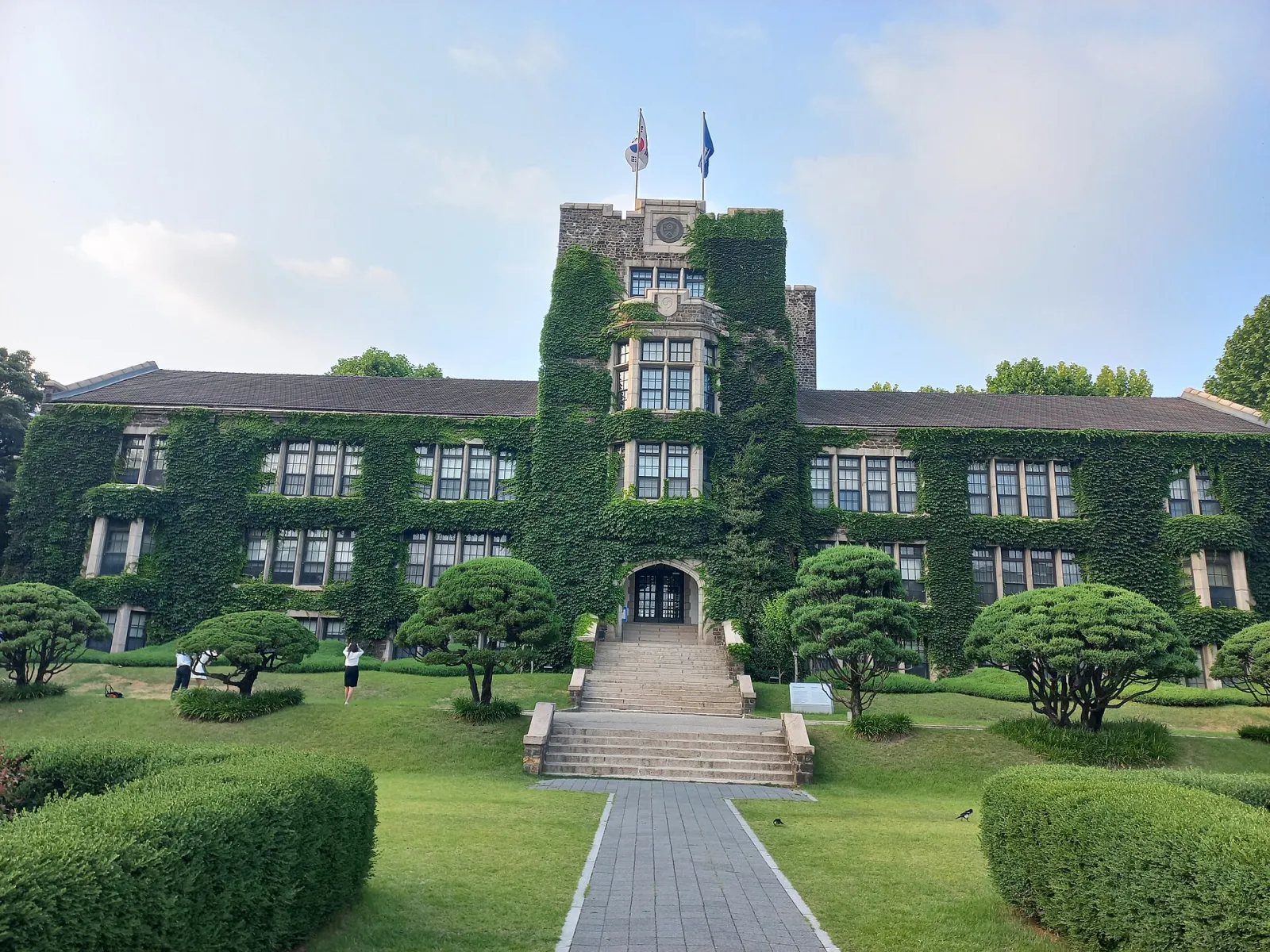
    Underwood Hall and campus at Yonsei University
    Photo: Striker9498 · CC BY-SA 3.0 · Wikimedia Commons

    International Student Overview

    The number of international students in Korea has been steadily rising. As of 2024 it surpassed 210,000, an all-time high. K-culture, the global standing of Korean companies, and excellent educational infrastructure are the main drivers.

    Trend in International Student Numbers by Year

    YearTotalDegree programsLanguage training
    2019160,165100,21559,950
    2020153,695113,00340,692
    2021152,281120,01832,263
    2022166,892131,04935,843
    2023181,842141,61040,232
    2024211,026165,86645,160

    Trend Analysis

    • 2020-2021: temporary decline due to COVID-19
    • 2022 onward: recovery, shifting to a sharp increase
    • Rising share of degree programs: a trend of moving from language training to degree programs
    • Impact of K-culture: surging demand for Korean learning driven by the popularity of Hallyu content

    By Degree Program (2024)

    ProgramNumberShare
    Associate degree15,2339.2%
    Bachelor's108,54765.4%
    Master's29,86918.0%
    Doctorate12,2177.4%

    Bachelor's programs make up the largest share at about 65% of the total. Graduate students (master's plus doctorate) also account for a substantial portion at about 25%.

    International Students by Nationality

    International students in Korea are mainly from Asian countries, with China and Vietnam together accounting for about 60% of the total. Recently, students from Central Asian and South Asian countries have been increasing rapidly.

    Top 10 Countries (2024)

    RankCountryNumberShare
    1China72,45934.3%
    2Vietnam57,36127.2%
    3Uzbekistan17,5438.3%
    4Mongolia9,1274.3%
    5Japan5,8912.8%
    6Nepal5,2342.5%
    7United States4,5212.1%
    8Indonesia4,1182.0%
    9Taiwan3,4561.6%
    10India2,9871.4%

    Fast-Growing Countries

    • Uzbekistan: more than tripled over the past 5 years
    • Mongolia: steadily rising thanks to the popularity of Korean culture
    • Nepal: increasing study for employment purposes
    • Indonesia: surging under the influence of K-POP and K-dramas

    Study Characteristics by Country

    • China: high share in degree programs, preference for metropolitan-area universities, many aiming for employment linkage
    • Vietnam: high share in language training, provincial universities also popular, many combining part-time work
    • Uzbekistan: high share of government scholarship students, preference for STEM majors
    • Mongolia: many entering medical and education fields, strong intention for long-term stay

    Distribution of International Students by Region

    About 58% of international students are concentrated in the Seoul metropolitan area (Seoul, Gyeonggi, Incheon). However, thanks to the scholarship benefits and lower living costs at provincial universities, preference for non-metropolitan areas has also been rising recently.

    Distribution by Province/City (2024)

    RegionNumberShare
    Seoul78,43237.2%
    Gyeonggi32,15615.2%
    Busan14,8237.0%
    Daejeon/Chungcheong21,34510.1%
    Daegu/Gyeongbuk18,5678.8%
    Gwangju/Jeolla12,2345.8%
    Incheon11,8925.6%
    Other21,57710.2%

    Characteristics by Region

    • Seoul: concentration of prestigious universities, many job opportunities, high living costs (rent 500,000-800,000 KRW/month)
    • Gyeonggi: good access to Seoul, relatively affordable, many emerging universities
    • Busan: strong in marine/tourism fields, living costs 30% cheaper than Seoul
    • Daejeon/Chungcheong: specialized in science and technology (KAIST, Chungnam National University, etc.)
    • Daegu/Gyeongbuk: strong in textiles/fashion and medical fields
    • Gwangju/Jeolla: culture and arts, agriculture, many scholarship benefits

    University Tuition Overview

    Tuition at Korean universities is relatively affordable compared with universities in English-speaking countries such as the US and UK. There are also various scholarship programs for international students, so the actual burden can be even lower.

    Average Tuition (Annual, 2024)

    TypeHumanities & Social SciencesNatural SciencesEngineeringArts & Physical Education
    National/public universities4,100,000 KRW5,100,000 KRW5,300,000 KRW5,500,000 KRW
    Private universities6,800,000 KRW8,100,000 KRW8,400,000 KRW8,900,000 KRW

    Tuition Comparison Across Major Countries (Annual, Bachelor's)

    • Korea: about 4,000,000-9,000,000 KRW (about $3,000-$7,000)
    • United States: about $20,000-$50,000 (state universities)
    • United Kingdom: about £9,250-£40,000
    • Australia: about AUD 20,000-$45,000
    • Japan: about ¥500,000-1,500,000

    Actual Tuition Burden

    With a scholarship, the actual burden is greatly reduced. On average, students receive a 30-50% reduction, and top performers can even get a 100% full-tuition scholarship.

    Example: private-university humanities program 6,800,000 KRW → TOPIK Level 5 scholarship 50% = actual payment 3,400,000 KRW/year

    Employment Rate of International Students

    A significant number of foreigners who complete their studies in Korea wish to find work here. However, the actual employment rate is about 30-35%, so systematic preparation is needed.

    Post-Graduation Employment Status

    ItemFigure
    Share staying in Korea after graduationAbout 35%
    Share converting to a work visa (E-7)About 18%
    Share applying for a job-seeking visa (D-10)About 25%
    Average time to find a jobAbout 4-8 months
    Main employment fieldsIT, trade, tourism, manufacturing

    Share by Employment Field (Based on E-7 Visa)

    • IT/SW development: 32%
    • Trade/marketing: 24%
    • Manufacturing: 18%
    • Interpretation-translation/education: 12%
    • Tourism/service: 8%
    • Other: 6%

    Average Starting Salary of Former International Students

    • Large corporations: 40,000,000-55,000,000 KRW
    • Mid-sized companies: 32,000,000-40,000,000 KRW
    • Small and medium enterprises: 28,000,000-35,000,000 KRW
    • Startups: 30,000,000-45,000,000 KRW (performance pay separate)

    Conditions That Favor Employment

    • TOPIK Level 5 or above (large corporations prefer Level 6)
    • STEM major (IT, engineering, data science, etc.)
    • Domestic internship experience (3 months or more)
    • Holding relevant certifications (national technical qualifications preferred)
    • A master's degree or higher from a Korean university

    TOPIK Test-Taking Status

    The number of people taking the TOPIK (Test of Proficiency in Korean) is surging every year. The worldwide popularity of K-culture and rising demand for study and employment in Korea are the main causes.

    Number of Test-Takers by Year

    YearDomesticOverseasTotal
    202098,765187,432286,197
    2021112,543203,876316,419
    2022134,567245,123379,690
    2023156,789289,456446,245

    Pass Distribution by Level (as of 2023)

    • Level 1: 8%
    • Level 2: 15%
    • Level 3: 22%
    • Level 4: 26%
    • Level 5: 18%
    • Level 6: 11%

    Average Pass Rate

    • TOPIK I (Levels 1-2): about 70%
    • TOPIK II (Levels 3-6): about 55%

    Top 5 Countries by Number of Test-Takers

    • 1st: China (about 35%)
    • 2nd: Vietnam (about 18%)
    • 3rd: Japan (about 12%)
    • 4th: Indonesia (about 6%)
    • 5th: Thailand (about 4%)

    Study Satisfaction

    Surveys of satisfaction with studying in Korea show overall high satisfaction. The safety, transportation, and cultural-experience categories in particular received high ratings.

    Overall Satisfaction

    4.3 / 5.0

    About 85% of respondents answered "satisfied" or "very satisfied"

    Satisfaction by Category

    FactorSatisfaction
    Safety4.5 / 5.0
    Transportation convenience4.4 / 5.0
    Cultural experience4.4 / 5.0
    Living infrastructure4.3 / 5.0
    Education quality4.2 / 5.0
    Korean-learning environment4.1 / 5.0
    Employment linkage3.6 / 5.0
    Housing-cost burden3.2 / 5.0

    Strengths of Studying in Korea

    • World-class public safety (safe even at night)
    • Convenient public transportation (subway and bus network)
    • Fast internet, advanced IT infrastructure
    • Cultural experience in the birthplace of K-culture
    • 24-hour amenities (convenience stores, cafes, delivery)
    • Affordable medical costs (with health insurance)

    Areas for Improvement

    • Housing-cost burden (especially in the Seoul area)
    • Strengthening employment-linkage programs
    • Expanding administrative services for foreigners
    • Expanding medical interpretation services
    • Easing part-time work-hour limits

    Willingness to Recommend

    78%

    78% of respondents said they "would recommend studying in Korea to others"

    Frequently Asked Questions (FAQ)

    Q. Why does the number of international students in Korea keep rising?

    A. The main factors are the worldwide popularity of Hallyu such as K-pop and K-dramas, relatively affordable tuition, a safe living environment, and a high standard of education. The rising global standing of Korean companies has also increased study aimed at employment linkage.

    Q. Why is the employment rate of international students low?

    A. The main causes are visa-issuance requirements (company size, job restrictions), insufficient Korean business-communication ability, and insufficient understanding of the Korean hiring process. However, the employment rate for students who prepare systematically is much higher.

    Q. Which region is best to study in?

    A. It depends on your goal. If you want many job opportunities, the Seoul metropolitan area is recommended; if you want to save on costs, a provincial area; and if you are interested in a specific field (science and technology, marine studies, etc.), a region specialized in that field.

    Q. Is it hard for international students to get scholarships?

    A. It depends on competition, but most universities offer a 30-50% tuition-reduction scholarship. Obtaining advanced TOPIK, maintaining good grades, and choosing a provincial university all raise your chances of securing a scholarship.

    Q. Where does this statistical data come from?

    A. It is based on materials released by government and public institutions, including the Ministry of Education, the Korean Educational Development Institute (KEDI), the National Institute for International Education (NIIED), and the official Study in Korea site. Check the respective institutions' websites for the latest data.